
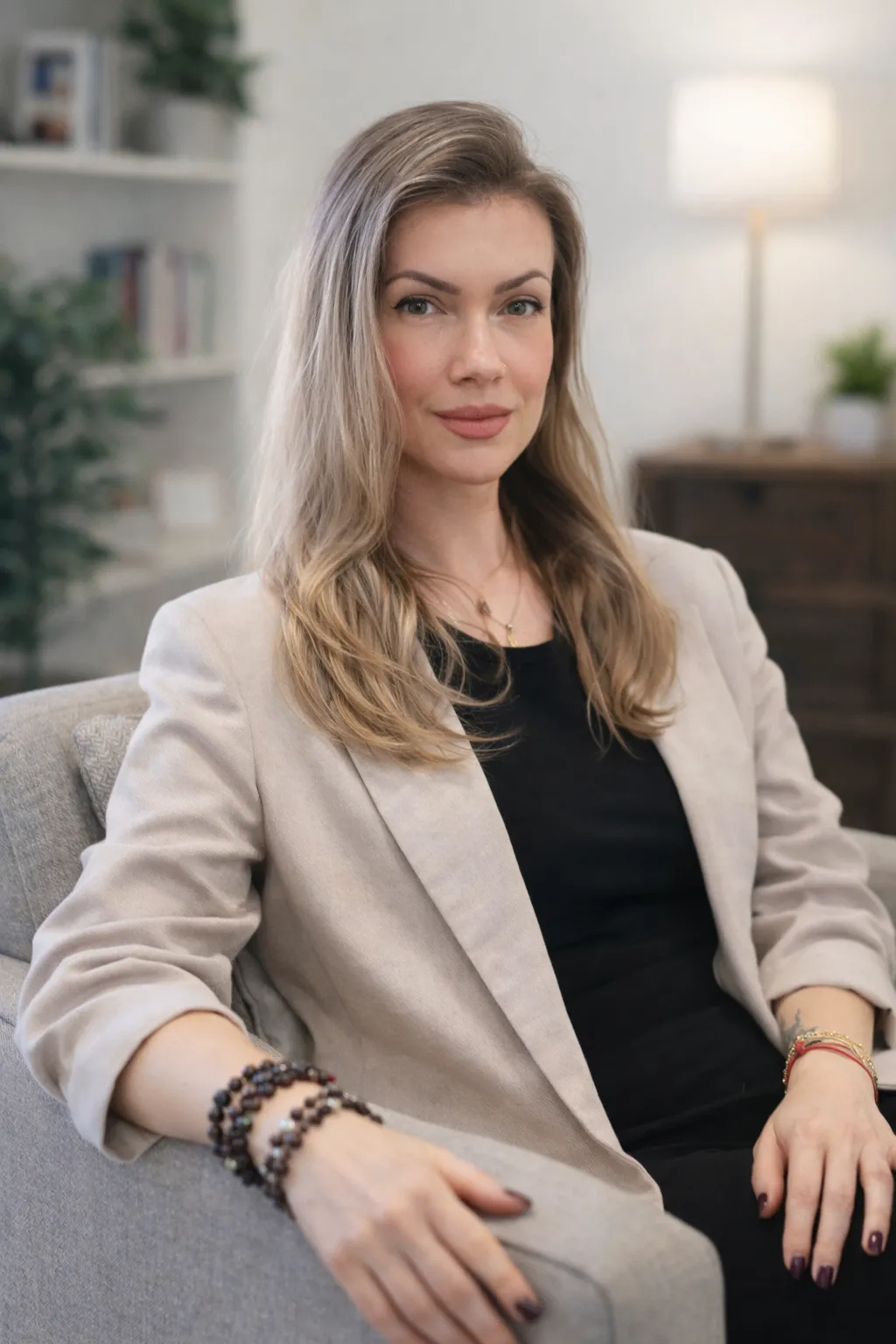
Alisa Gracheva, LMHC
Licensed Mental Health Counselor | Trauma Specialist | Creator of The Trauma W.O.R.K. Method
I am a Licensed Mental Health Counselor with over a decade of experience working with individuals experiencing trauma, anxiety, and other emotional and behavioral challenges. My work focuses on how life experiences can influence thoughts, emotions, nervous system responses, and patterns of behavior.
I integrate established clinical approaches, including EMDR and cognitive behavioral therapy, with somatic practices and mindfulness. I developed The Trauma W.O.R.K. Method as an integrative educational framework to help individuals increase self-awareness, strengthen emotional regulation skills, and support lasting change.

Understanding Trauma and Its Impact
Trauma can develop in response to experiences that overwhelm a person’s ability to cope. These may include a single distressing event or repeated experiences such as abuse, neglect, or ongoing exposure to threatening circumstances.
Other difficult experiences, including prolonged stress, loss, or challenging relationships, can also influence how a person thinks, feels, and responds to the world.
These experiences do not affect everyone in the same way, and not every difficult experience leads to trauma.
Understanding these patterns can help individuals develop greater awareness, build emotional regulation skills, and respond to present-day challenges with greater flexibility and choice.
The Trauma W.O.R.K. Method
The Trauma W.O.R.K. Method is an integrative educational framework developed to help individuals understand the connections between their experiences, thoughts, emotions, bodily responses, and behaviors.
Informed by clinical approaches and principles of nervous system regulation, the method provides a structured path for developing self-awareness, practicing new skills, and supporting personal growth.
The Framework
W — Witness the Patterns
Recognize recurring thoughts, emotional responses, triggers, and behaviors with curiosity and without judgment.
O — Organize the Mind
Explore the beliefs and interpretations that influence how you experience and respond to situations.
R — Regulate and Rewire
Practice cognitive and body-based skills that support emotional regulation and help you develop more adaptive responses.
K — Keep Transforming
Integrate what you have learned into daily life through continued practice, reflection, and intentional action.
The goal of this W.O.R.K. is to develop a greater understanding of your patterns and build practical skills that support emotional well-being, resilience, and ongoing growth.
The Benefits of Doing the W.O.R.K.
By understanding patterns shaped by past experiences, you can develop greater awareness of how you respond to stress, relationships, and everyday challenges.
This work can help you strengthen emotional regulation, make more intentional choices, improve communication, and build healthier ways of relating to yourself and others.
Speaking and Workshops
Through speaking engagements and workshops, Alisa brings the principles of The Trauma W.O.R.K. Method to organizations, teams, and communities. These educational experiences explore how past experiences shape patterns and offer practical tools for self-awareness, resilience, and personal growth.